


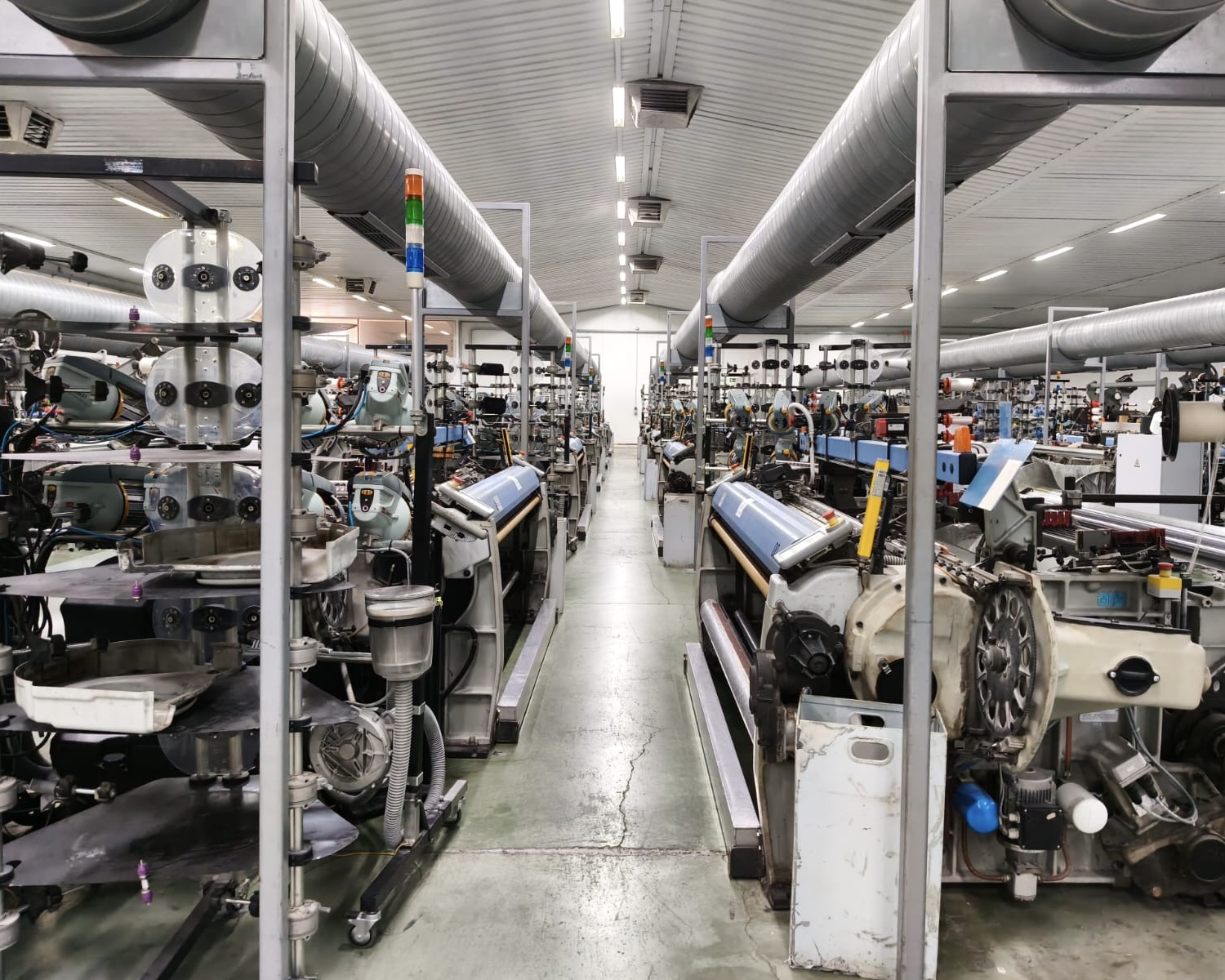
Itema Weaving Machine and ITEMA WEAVING LOOMS for Reliable Textile Production
Itema weaving machine models and ITEMA WEAVING LOOMS are widely preferred by textile manufacturers looking for reliable, flexible, and long-lasting production equipment. Built on the engineering heritage of well-known brands such as Somet, Vamatex, and Sulzer, Itema has become a strong choice for manufacturers that expect consistent performance from rapier and air jet weaving systems.
At Enhas Foreign Trade, we support textile companies searching for second-hand Itema weaving machines with more than simple machine supply. We provide a safer purchasing process that includes technical evaluation, inspection support, logistics, and installation guidance. Itema weaving looms such as the R9500, A9500, and other equipment configurations can be used across a wide production range, from denim and shirting fabrics to technical textiles and special woven products.
Why Choose an Itema Weaving Machine and ITEMA WEAVING LOOMS?
An Itema weaving machine stands out not only because of its production speed, but also because of the flexibility it brings to a manufacturing line. For a textile factory, speed matters. Yet speed alone is rarely enough. Fabric change frequency, yarn type, energy consumption, maintenance requirements, and second-hand market value all play a direct role in the investment decision.
This is where ITEMA WEAVING LOOMS become especially valuable. Rapier models provide an advantage for manufacturers working with different yarn types and frequent fabric changes. Air jet models, on the other hand, are a strong option for factories focused on high-volume production with standard fabric types.
In short, choosing the right Itema weaving machine should not be based only on price. The decision should also reflect the fabric type, production target, technical configuration, and long-term operational expectations.
Itema Rapier Weaving Loom: A Strong Choice for Flexible Production
Rapier weaving looms have a broad place in textile production because they can work with a wide variety of yarns. Itema rapier weaving looms combine this flexibility with high production quality and stable performance.
They are especially useful for manufacturers that frequently change fabrics, work with different patterns, or use various yarn combinations. From fine yarns to thicker and more specialized materials, rapier technology offers balanced and controlled results.
What Makes the Itema R9500 Stand Out?
The Itema R9500 is one of the most requested models in the second-hand weaving machine market. There are several reasons for this. First, its frame structure is designed for stable operation. By reducing vibration at higher speeds, it contributes to both fabric quality and longer component life.
The R9500 also holds its value well in the second-hand market. That makes it not only a production machine, but also a more secure investment asset. A well-maintained, technically inspected, and properly revised second-hand Itema R9500 weaving machine can support a production line for many years.
Itema Air Jet Weaving Loom: Built for Speed and Serial Production
The Itema air jet weaving loom is designed for manufacturers focused on high-volume output. With weft insertion through compressed air, this system provides a clear speed advantage, especially in facilities working with standard yarns.
Air jet models can deliver efficient results in denim, sheeting fabrics, cotton-based fabrics, polyester fabrics, and similar production categories. However, they are not ideal for every fabric type. For thicker, hairy, metallic, fancy, or more complex yarns, rapier models may be the better choice.
For this reason, companies searching for a second-hand Itema air jet loom should evaluate more than the price. Production plan, fabric type, compressor infrastructure, and energy costs should also be considered before making a decision.
What to Consider When Buying a Second-Hand Itema Weaving Machine
A second-hand weaving machine investment can offer a clear cost advantage when managed correctly. But making a decision based only on listing details can be risky. A machine that will operate for years in a production line must be evaluated in terms of technical history, maintenance condition, originality, and current working performance.
Mechanical Components and Transfer System
In rapier models, the rapier tape, rapier heads, guide elements, bearings, and transfer system should be carefully inspected. Worn components may cause short-term production stops and, over time, higher maintenance costs.
A revised machine is not automatically a safe machine. It is important to know which parts were revised, whether original spare parts were used, and whether the machine passed test production after the revision.
Electronic Boards and Control Panel
In newer Itema weaving machines, the electronic control system directly affects production efficiency. The touchscreen, control boards, sensors, and software infrastructure should be checked before purchase.
It is also important to understand whether the electronic boards have been repaired before, whether there are signs of overheating, and whether the operator panel functions properly.
Serial Number and Machine History
In the second-hand market, some looms may be assembled from parts taken from different machines. That is why the chassis number, motor details, and electronic components should be checked for consistency.
Enhas Foreign Trade provides transparent information about the technical condition, equipment configuration, and machine background of the looms it offers. This approach helps reduce purchasing risks, especially for corporate textile manufacturers.
Itema R9500 vs. A9500 Comparison
The right Itema weaving loom depends on the production target. The table below gives a clear comparison between the R9500 and A9500 models.
| Feature | Itema R9500 | Itema A9500 |
|---|---|---|
| Weft insertion system | Rapier system | Air jet system |
| Suitable production type | Various fabrics and yarn types | Standard and serial fabric production |
| Fabric flexibility | High | Medium to high |
| Production speed | Medium to high | Very high |
| Energy requirement | Mainly electricity | Electricity + compressor infrastructure |
| Pattern capability | Strong for dobby and jacquard production | More efficient for simpler weaves |
| Second-hand demand | High among flexible production facilities | High among serial production facilities |
| Typical application | Shirting, technical textiles, special fabrics | Denim, sheeting, standard fabrics |
| Investment logic | Flexibility and quality focused | Speed and volume focused |
How Should Itema Weaving Loom Prices Be Evaluated in 2026?
Itema weaving loom prices vary depending on model year, working width, shedding system, jacquard or dobby configuration, general condition, and revision status. For that reason, giving a single fixed price would not be accurate.
Clean, well-maintained, technically inspected, and production-ready second-hand machines usually have higher market value. This is especially true for high-demand models such as the R9500.
When searching for a second-hand Itema weaving machine for sale, focusing only on the initial purchase cost can be misleading. A cheaper machine with an unclear maintenance history may create serious expenses later. In contrast, a machine that has been inspected, tested, and supported with a planned logistics and installation process may be more reliable in terms of total investment cost.
Why Choose Enhas Foreign Trade?
Trust is as important as technical knowledge in the second-hand textile machinery market. A weaving machine is not a short-term purchase. It is a production asset expected to work reliably for years.
Enhas Foreign Trade provides professional support for second-hand Itema weaving machines, including machine sourcing, technical inspection, dismantling, loading, shipment, and installation guidance. This allows manufacturers to purchase not just a machine, but a safer transition into production.
Advantages Offered by Enhas Foreign Trade
- Technically inspected machine options
- Revision and expert evaluation support
- Stock tracking for R9500, A9500, and other Itema models
- Logistics, loading, and installation assistance
- Spare parts and technical consultancy guidance
- Second-hand machine sourcing from Europe when needed
Which Itema Weaving Machine Is Right for Your Production?
If your factory produces various fabrics, changes patterns frequently, or works with different yarn types, rapier models such as the Itema R9500 may be the better choice. In this case, flexibility, quality, and fabric diversity are the main priorities.
If your production is focused on standard fabrics, higher quantities, and faster output, an air jet model such as the Itema A9500 may be more suitable. Here, speed, capacity, and unit cost efficiency become more important.
The right choice should be made by evaluating fabric type, machine width, shedding system, target capacity, and budget together.
Frequently Asked Questions
Why is the Itema R9500 so popular?
The Itema R9500 is widely preferred because of its stable frame structure, broad fabric production capability, and strong second-hand market value. It is a reliable model for manufacturers looking for flexibility in rapier weaving.
Is it safe to buy a second-hand Itema weaving machine?
Yes, if the machine is properly inspected. The key points are technical history, maintenance condition, electronic system, mechanical components, and originality. Machines that are not checked in detail may create unexpected production costs.
Which fabrics are suitable for an Itema rapier weaving loom?
Rapier models are suitable for shirting fabrics, technical textiles, special yarn fabrics, jacquard production, and manufacturing lines where product changes are frequent. Their ability to work with different yarn types is one of their strongest advantages.
When is an Itema air jet weaving loom a better choice?
Air jet models are more suitable for factories focused on high-speed production with standard yarns. They can be efficient in denim, sheeting, cotton, and polyester fabric production.
What affects second-hand Itema weaving loom prices?
Prices depend on model year, machine width, jacquard or dobby configuration, operating condition, revision history, spare part needs, and current market demand. A technical review is necessary for an accurate price evaluation.
Is it risky to buy a second-hand Itema machine directly from an owner?
It can be risky if there is no technical inspection. Hidden mechanical problems, repaired electronic boards, or improper revisions may cause additional costs later. A corporate supply process helps reduce these risks.
Can Enhas Foreign Trade source Itema machines from abroad?
Yes. Enhas Foreign Trade can source second-hand Itema weaving machines from Europe according to requested specifications and support the customs, transportation, and delivery process.
Should I choose the R9500 or the A9500?
If your production depends on fabric variety, special yarns, and pattern flexibility, the R9500 may be more suitable. If your priority is serial production, high speed, and standard fabric output, the A9500 can be considered.
Making the Right Itema Weaving Machine Investment
Itema weaving machines offer strong alternatives for textile manufacturers that want to combine quality, speed, and flexibility in a single investment plan. However, choosing the right machine should not be based only on brand or model name.
The machine’s technical condition, your production target, fabric type, budget, and after-sales process should all be evaluated together. Enhas Foreign Trade supports companies searching for second-hand Itema weaving looms with a transparent, reliable, and technically grounded purchasing process.
For current second-hand Itema weaving machine options, model details, and price information, you can contact Enhas Foreign Trade and evaluate the most suitable investment alternative for your production line.